Categories
Featured Featured-Home News

Inovalon and OMNY Health Partner to Launch Linked Real-World Dataset to Accelerate Research and Improve Patient Outcomes

  • Linked dataset connects Inovalon claims data with OMNY Health EHR data to power real-world evidence research
  • Combines claims data alongside structured and unstructured clinical records for a 360-degree view of the patient
  • Real-world data offering helps researchers better understand disease progression and treatment response

BOWIE, Md. – August 11, 2026 Inovalon, a leading provider of data and solutions empowering data-driven healthcare, and OMNY Health, a leading healthcare ecosystem for compliant real-world data (RWD) insights at scale, today announced a strategic real-world data partnership that combines Inovalon’s primary source closed claims data with OMNY Health’s EHR data and clinical notes. The dataset gives researchers and life sciences organizations a comprehensive view of disease progression, treatment patterns, and outcomes to support real-world evidence studies and help accelerate access to new precision therapies for patients.

The linked dataset includes 248 million lives in closed claims, 175 million lives in EHR data, and 7+ billion clinical notes, with more than 40% of lives linked across sources. Closed claims provide longitudinal visibility into care utilization and costs across providers, payers, and settings, while EHR data and clinical notes add the clinical depth behind each encounter, including medical history, test results, disease-specific scores and markets, provider or patient reported outcomes. Together, they support research into how therapies perform in the real world across diverse patient populations.

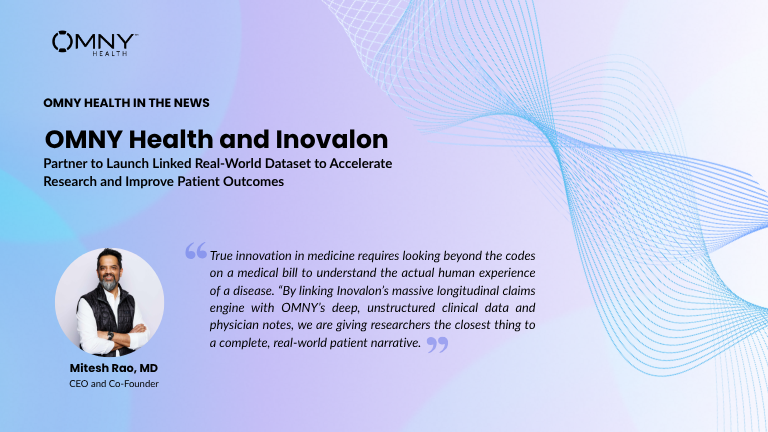
“True innovation in medicine requires looking beyond the codes on a medical bill to understand the actual human experience of a disease,” said Mitesh Rao, M.D., CEO of OMNY Health. “By linking Inovalon’s massive longitudinal claims engine with OMNY’s deep, unstructured clinical data and physician notes, we are giving researchers the closest thing to a complete, real-world patient narrative. This linked dataset bridges a critical gap, allowing life sciences teams to discover meaningful insights faster and accelerate the delivery of precise, life-saving therapies.”

The dataset supports research across any therapeutic area, and the value compounds in complex conditions. For example, with Alzheimer’s disease, patients move between insurance plans as they age and their disease progresses. Claims data maintains continuity across those transitions, while clinical notes capture cognitive decline or improvement, so researchers gain a continuous view of both the care pathway and the underlying disease.

“HEOR teams are under growing pressure to generate evidence that is clinically rich, economically defensible, and compliant,” said Ed Chidsey, President of Inovalon’s RWD & Insights and Payer Business Units. “Inovalon and OMNY are giving researchers a complete de-identified view of the patient along with the clinical and economic insights to drive the next generation of breakthrough research.”

Inovalon and OMNY Health share a commitment to protecting patients and their sensitive health data. Privacy, security, and data quality are foundational to the offering, with de-identification under the HIPAA Expert Determination standard and continuous quality controls applied at every stage of the data lifecycle.

As part of the collaboration, Inovalon has made an undisclosed strategic investment in OMNY Health.

To learn more about Inovalon’s linked real-world dataset and full suite of HEOR and RWE solutions, please visit: https://www.inovalon.com/products/life-sciences/.


About Inovalon

Inovalon is a leading provider of data and solutions empowering data-driven healthcare. We bring together national-scale connectivity, real-time primary source data access, and advanced analytics into a sophisticated platform empowering improved outcomes and economics across the healthcare ecosystem. The company’s analytics and capabilities are used by over 50,000 active, licensed customers, and are informed by the primary source data of more than 99 billion medical events across 1.1 million physicians, 736,000 clinical settings, and 461 million unique lives. For more information, visit www.inovalon.com. 


About OMNY Health

OMNY Health™ is the leading healthcare ecosystem for compliant real-world data insights at scale. OMNY Health connects patients, providers, and life sciences companies by transforming vast amounts of de-identified electronic health record data, clinical notes, and claims data into robust, research-ready insights. Leveraging proprietary AI, NLP, and LLM technologies, OMNY Health accelerates therapeutic innovation, optimizes clinical development, and enhances patient care. For more information, visit www.omnyhealth.com.


Contact:

Tom Paolella

AVP, Press and Analyst Relations, Inovalon

Thomas.Paolella@inovalon.com

OMNY Health Media Contact: media@omnyhealth.com 
Categories
Featured Product

Moving Beyond Diagnoses: Using Real-World PHQ-9 Data to Identify Appetite-Related Metabolic Risk in Depression and Anxiety 

Depression and anxiety are common conditions associated with a range of physical health outcomes, including changes in body weight. However, risk is not uniform across all patients. Two individuals with the same diagnosis may have very different symptom profiles and very different metabolic risks. 

This symptom variability raises an important question: Can routinely collected symptom data help identify patients who may be at higher risk for clinically meaningful weight outcomes? 

Many real-world data sources capture diagnoses, procedures, and medications, but few contain the depth of clinical information needed to understand symptom-level variation within a disease. Integrated electronic health record data can provide access to routinely collected patient-reported outcomes, such as the Patient Heath Questionnaire-9 (PHQ-9) responses, which is a questionnaire assessing mental health symptoms across several domains. The integration of the PHQ-9 with clinical measurements like body mass index (BMI) and comorbidities creates an opportunity to move beyond diagnosis codes and evaluate how specific symptoms may relate to meaningful health outcomes. 

To explore this question, we analyzed real-world clinical data from nearly 2 million encounters among adults with depression and/or anxiety who had documented BMI measurements and item-level responses to the PHQ-9 within the OMNY Health real-world data platform. Rather than focusing only on diagnosis-level measures, we examined PHQ-9 item 5, which captures appetite-related symptoms (“poor appetite or overeating”). 

Our findings showed that appetite dysregulation was associated with meaningful differences in BMI outcomes. Higher severity of appetite-related symptoms was associated with increased likelihood of both underweight and severe obesity, suggesting that appetite-related symptoms may identify patients at risk for weight extremes. 

Importantly, the relationship was not simply driven by obesity overall. The strongest pattern was observed for class II-III obesity, while class I obesity remained relatively stable across appetite symptom severity levels. This result suggests that symptom-level data may help identify patients with more clinically significant metabolic risk profiles. 

These findings persisted even after accounting for demographic characteristics, antidepressant and antipsychotic use, and cardiometabolic comorbidities including diabetes, hypertension, and dyslipidemia. 

A key takeaway is that routinely collected clinical information, such as PHQ-9 responses, when documented and accessible, can provide value beyond traditional diagnosis categories. Item-level patient-reported outcomes may offer scalable opportunities to better understand heterogeneity within populations and support more personalized approaches to care. 

As real-world data continues to expand, leveraging the depth of information already captured in clinical workflows may help uncover new insights into disease patterns, patient risk, and opportunities for intervention. 

——-

This work was presented as a podium presentation at the 2026 ISPOR Annual Meeting in Philadelphia, highlighting the value of rich real-world clinical data and patient-reported outcomes for generating actionable evidence. 

Contact us at info@omnyhealth.com to access the full presentation.
Categories
Product

OMNY Health at ISPOR 2026: Driving the Future of Evidence Generation

What a week at ISPOR 2026!   

The OMNY Health team had a highly productive and impactful showing at this year’s annual conference. We anchored our presence with one podium presentation and six poster presentations—including a standout client-led poster utilizing OMNY Health data.  

Our featured research spanned a diverse array of therapeutic areas, economic evaluations, and advanced methodological frameworks, demonstrating our robust capabilities in health economics and outcomes research (HEOR). From mental health and metabolic outcomes to respiratory and immunology research, these studies highlight the critical role that high-quality real-world data (RWD) plays in modern evidence generation.  

Beyond our own presentations, our team spent the week engaging with the definitive themes shaping the future of HEOR: the evolution of AI adoption and advanced evidence generation in oncology. 

A major takeaway from the sessions on AI and Large Language Models (LLMs) is the critical shift from manual abstraction to automated, scalable data enrichment.  

  • The Challenge: The industry faces an unprecedented demand for RWD, but a massive volume of clinical narrative remains locked in unstructured electronic health records (EHRs) and physician notes. Traditional manual abstraction is costly, slow, and unsustainable. 
  • The Methodological Solution: Discussions highlighted advanced AI optimization frameworks—splitting AI into Machine Learning (ML) for predictive risk profiling and Natural Language Processing (NLP) for clinical text recognition. Leading methodologies are deploying multi-layered approaches (combining web scraping, PDF processing, and rule-based parsing with prompt-specific LLMs) alongside quality frameworks like the Kahn Framework to eliminate false negatives and capture missing variables (such as nuanced Social Determinants of Health). 
  • The OMNY Advantage: At OMNY Health, this is exactly where our AI services add distinct value. By converting unstructured text into structured, normalized data spaces , we bypass traditional site-visitation. We augment existing HEOR methods to deliver high-fidelity, generalizable datasets ready for advanced applications like digital twins and regulatory-grade evidence generation. 

Oncology continues to be a frontier where conventional evidence paradigms fall short, especially as discussed in the cancer plenary on the financial toxicity of care and the rare cancer forums. 
 

  • The Challenge: Generating credible real-world evidence (RWE) in oncology—particularly rare cancers—is routinely restricted by small sample sizes, single-arm designs, and highly fragmented data across the care continuum. Furthermore, regulatory bodies and Health Technology Assessment bodies (HTAbs) demand strict adherence to data quality frameworks. 
  • The Methodological Solution: To accelerate market access and build stakeholder trust, the industry is moving toward advanced methods like target trial emulation, external control arms, and robust EHR-derived data quality frameworks to validate longitudinal patient journeys. 
  • The OMNY Advantage: Our specialized oncology data offering directly answers this call. OMNY’s large, US-based oncology EHR-derived database is built with rigorous regulatory data quality frameworks in mind. By integrating medicines, molecular testing, and medical services across the care continuum, we provide life sciences companies and researchers with the deep, longitudinally complete data required to evaluate complex variables, track treatment adherence, and demonstrate true patient-centered value. 
     

A huge thank you to everyone who stopped by our sessions, visited our posters, or took the time to connect with our team! We loved catching up with familiar faces and sparking new collaborations. 

 
The conversations we had reinforce how vital high-quality RWD and intelligent AI extraction are to shaping the future of healthcare. We’re looking forward to continuing these discussions, supporting regulatory buy-in, and driving the industry forward together. 
 

Missed us at the event but want to learn more about our advanced oncology data capabilities or AI-driven RWD solutions? Let’s connect!  

Categories
Featured-Home News

OMNY Health Surpasses 175 Million Patient Milestone; Launches Oncology Product Suite to Solve Complex Real-World Evidence Gaps

ATLANTA, GA — OMNY Health today announced a major expansion of its healthcare data ecosystem, now representing more than 175 million de-identified longitudinal patient lives. This milestone — containing nearly half of the U.S. population — solidifies OMNY Health as the nation’s largest, most representative commercial source of first-party, provider-led clinical Real-World Data (RWD).

This growth is powered by targeted expansions across Integrated Delivery Networks (IDNs), community hospitals, Academic Medical Centers (AMCs), and large multi-state specialty groups. By capturing data directly from the point of care, OMNY provides the healthcare and life sciences industry with unparalleled access to diverse patient journeys at a national scale.

Bridging the “Why” Gap in Cancer Research

In tandem with this network expansion, OMNY has launched OMNY Foundation: Oncology, a specialty product suite designed to bridge critical data gaps in cancer research. While traditional datasets often lack pre-diagnosis and post-treatment context, OMNY’s solution provides deep insights from the full patient journey for over 10 million oncology patient journeys (2017–Present).

Consistent with OMNY’s other therapeutic-specific solutions, the oncology product uniquely integrates downloadable structured EHR data and holistic administrative claims data with de-identified clinical notes and diagnostic reports (e.g., radiology, pathology). This allows researchers to peer into the “narrative” of care — capturing physician rationale, therapy selection strategies, and the nuances of treatment planning that structured fields alone miss.

Regulatory-Grade Depth for External Control Arms

The OMNY Foundation: Oncology suite was engineered to meet the FDA’s stringent “Fit-for-Purpose” criteria, making it a viable asset for regulatory submissions and External Control Arms (ECAs). Key features include:

  • “Whole-Patient” Visibility: Seamlessly links oncology records with cardiovascular, metabolic, and primary care data to monitor pre-diagnosis history, comorbidities, and long-term survivorship.
  • Precision Variables: Direct access to granular data including tumor staging, treatment plans, mutation data, and molecular biomarkers (e.g., EGFR, ALK, PD-L1).
  •  Auditability & Provenance: A transparent digital “paper trail” connects every data point to its source clinical event, ensuring the rigorous transparency required for high-stakes regulatory evidence.
  • Integrated Outcomes: Pre-linked 3rd-party administrative claims and mortality information provide a comprehensive view of care delivery, in addition to treatment response variables and long-term survival.

“Our goal is to transition the industry from ‘big data’ to ‘deep data,'” said Mitesh Rao, MD, CEO of OMNY Health. “By capturing the modern era of oncology screening and care across our more than 175 million patients, we provide the scale of a national aggregator with the clinical nuance usually possible in a specialty registry. We are delivering the high-resolution evidence required to answer the most complex questions in medicine today.”


About OMNY Health

OMNY Health is a premier healthcare data ecosystem that facilitates the secure exchange of clinical real-world data (RWD). By bridging the gap between healthcare providers and the life sciences community, OMNY accelerates medical breakthroughs and improves patient outcomes. In addition to its new Oncology product suite, OMNY maintains specialized RWD products in Dermatology, Ophthalmology, Gastroenterology, Respiratory, Cardiology, and Neurology therapeutic areas.

For more information, visit: www.omnyhealth.com

Media Contact: media@omnyhealth.com
Categories
Product

Lung Function Assessment in Patients with Persistent Asthma: Impact of Disease Severity and Acute Exacerbation Status © 

By Lawrence Rasouliyan, Amanda G. Althoff, and Danae A. Black | OMNY Health 

Understanding the Role of Lung Function in Asthma Management 

Lung function monitoring is important in the management of asthma, and it provides valuable information to clinicians on disease control and patient response. 

Pulmonary function tests are common tests conducted in clinical settings, yet they are infrequently documented as measurements in free-text notes or tabulated sources of real-world data. 

Meanwhile, disease severity and acute exacerbations are usually available based on the diagnosis codes such as the ICD-10.  

However, the association between coded severity and measured indices of lung function has not been well characterized in routine clinical care data on a large scale. 

This gap was filled by our team at OMNY Health, which analyzed the relationship of lung function measures with severity and exacerbation status in subjects with persistent asthma. 

Study Overview 

Using electronic health record (EHR) data from 2017 to 2024, we analyzed information from three integrated delivery networks included in the OMNY Health real-world data platform.  

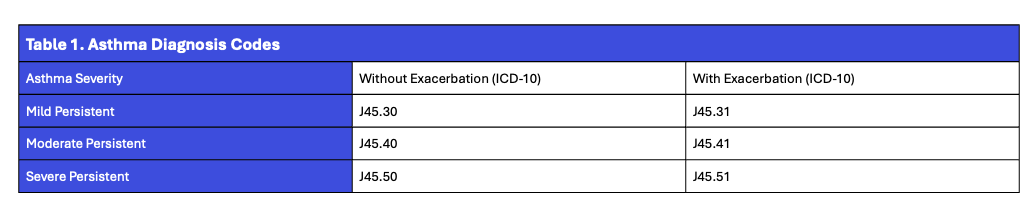
Patients were included if they had an ICD-10 code for persistent asthma classified as mild, moderate, or severe—either with or without an acute exacerbation. The relevant ICD-10 codes used for classification are shown below. 

To be included, patients also needed at least one documented lung function measurement—specifically, forced expiratory volume in one second (FEV₁) percent predicted (pp), forced vital capacity (FVC) pp, or FEV₁/FVC pp—associated with an asthma-related encounter. 

Key Findings 

Out of approximately one million patients identified with an asthma ICD-10 code indicating severity and exacerbation status, 14,003 patients (across 31,463 encounters) had corresponding lung function data available. 

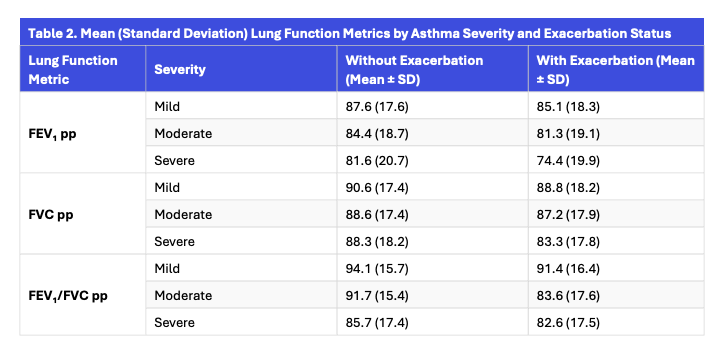
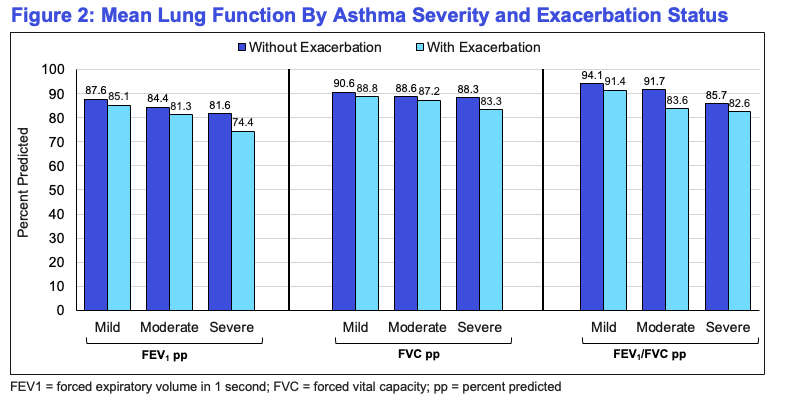
Across all severities, lung function metrics declined with increasing asthma severity, and patients experiencing exacerbations consistently had lower lung function compared to those without exacerbations.

What the Data Suggests 

Findings have shown a considerable decrease in mean lung function values because asthma severity increased—regardless of exacerbation status.  

Patients experiencing exacerbations had consistently lower FEV₁, FVC, and FEV₁/FVC metrics as compared to the ones with no exacerbations.  

Most interestingly, when we compared ICD-10–coded severity to typical clinical cutoffs for lung function, the correspondence was not strong enough.  

This undoubtedly suggests that ICD-10 coding alone may not fully capture physiological severity, emphasizing the importance of integrating structured and unstructured lung function data into real-world datasets. 

Why It Matters 

By leveraging structured EHR data, this study highlights the potential to better understand asthma progression and treatment outcomes across real-world populations. 

The results reinforce the value of using lung function metrics—not just diagnosis codes—to assess disease burden and guide more precise asthma management strategies. 

References 

  1. Levy ML, et al. NPJ Prim Care Respir Med. 2023;33(1):7. 
  1. Firoozi F, et al. Thorax. 2007;62(7):581–7. 
  1. Gronkiewicz C, et al. Chest. 2015;147(4):1152–1160. 
  1. Xie F, et al. JMIR AI. 2025;4:e69132. 


© 2025 OMNY Health  

Categories
Product

Development and Validation of an N-gram Model to Differentiate Between Melena and Hematochezia Using Unstructured EHR Notes © 

By Vikas Kumar, Yan Wang, and Lawrence Rasouliyan | OMNY Health 

Extracting Meaningful Insights from Free-Text EHR Data 

Extracting meaningful information from unstructured data is never easy, It’s often a time-consuming task. In structured EHR data for instance, certain values such as diagnosis codes are often insufficient to capture the full context. The same is mostly true for gastrointestinal bleeding, where a slight inaccuracy might cause significant implications for both diagnosis and treatment. 

One such challenge which our team at OMNY Health tried to solve is the differentiation between two forms of GI bleeding: melena, black tarry stools, usually caused by upper GI bleeding, and hematochezia, bright red blood in stool, usually from lower GI bleeding. Although both are captured under general ICD-10 codes, namely K92.1 and K92.2, respectively, these do not make a distinction between the two. Our objective was to bridge this gap using unstructured data and machine learning. 

Building the Model: From Clinical Notes to Meaningful Insights 

We conducted a retrospective observational study using the OMNY Health Real-World Data Platform (2017–2025). Patients with ICD-10 codes starting with “K” (gastrointestinal diseases) or “E” (endocrine diseases) were included. A clinical domain expert reviewed 1,000 random clinical notes from patients with GI bleed–related codes (K92.1 or K92.2) to identify phrases that indicated either melena or hematochezia. 

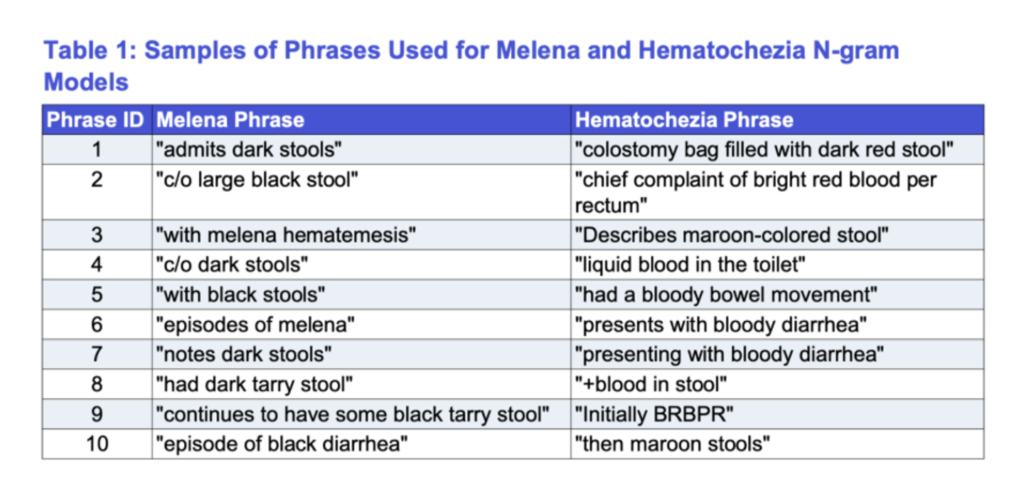
Through this manual review, our team identified 28 phrases for melena and 51 phrases for hematochezia, which were then used to build two separate N-gram models. These models searched millions of notes across the dataset to identify encounters associated with each condition. 
 
These models are validated against real-world clinical outcomes to ensure reliability. We compared the rates of upper versus lower GI diagnoses, endoscopic procedures (EGD vs. colonoscopy), and pharmacologic treatments within 30 days following each encounter. 

Results: Real-World Validation That Reflects Clinical Reality 

Our validation showed that the N-gram models accurately differentiated between the two GI bleeding types. 

  • Precision: 96% for melena; 98% for hematochezia 
  • Recall: 7.9% for melena; 5.3% for hematochezia 

TABLE 1 — Samples of Phrases Used for Melena and Hematochezia N-gram 

(Note: samples shown; complete list of phrases used to train each model is available in OMNY Health’s internal dataset.) 

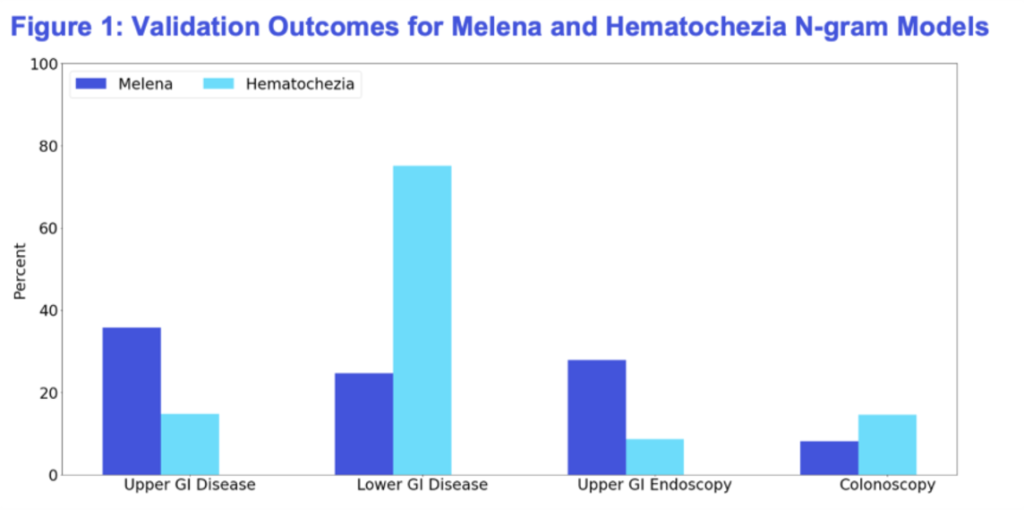
Patients identified with melena were more likely to have an upper GI diagnosis and to undergo esophagogastroduodenoscopy (EGD). Conversely, patients with hematochezia were more likely to have lower GI diagnoses and receive colonoscopy procedures. These results aligned closely with clinical expectations, reinforcing the accuracy and validity of our models. 

Figure 1. Validation Outcomes for Melena and Hematochezia N-gram Models 

Why It Matters: A Step Toward Richer Real-World Evidence 

The ability to differentiate between melena and hematochezia in unstructured EHR data proves to be more beneficial for more granular, clinically meaningful insights. This allows researchers and healthcare organizations to:

  • Better characterize patient populations
  • Refine outcome measures for GI bleeding studies
  • Support drug safety and effectiveness research with higher precision

OMNY Health platform helps researchers to unlock the full potential of real-world clinical information, i.e. turning free-text notes into actionable insights, hence improving care delivery and research quality. 

Looking Ahead 

The study demonstrates how natural language processing (NLP) can be effective in bridging gaps in structured EHR data. As we continue validating these models, our primary focus remains on empowering researchers, clinicians, and life science partners with trustworthy, real-world data solutions. 

© 2025 OMNY Health  

Categories
Featured-Home News

OMNY Health Wins Fierce Healthcare Innovation Award for Clinical Information Management 

We are thrilled to announce that OMNY Health has been named a winner in the prestigious Fierce Healthcare Innovation Awards for our groundbreaking work in Clinical Information Management! 

This recognition from Fierce Healthcare, a leading voice at the intersection of healthcare, business, and policy, celebrates the organizations that are driving improvements and truly transforming the industry. 

OMNY Health was honored specifically for our innovative work on Unstructured Clinical Notes, demonstrating our unwavering commitment to unlocking the full potential of real-world data to advance research, power AI, and ultimately, improve patient care. 

OMNY’s Eric Lavin, SVP Commercial, and Dr. Mitesh Rao, CEO at the Fierce Innovation Awards in New York City

Unlocking the Hidden Context of Care 

The majority of critical patient context is often buried within unstructured data inside the Electronic Health Record (EHR). This context includes the nuances of a diagnosis, the challenges of a treatment plan, and the social factors affecting a patient’s journey, such as physician notes, discharge summaries, and clinical reports. This information is notoriously difficult to access, integrate, and utilize at scale. 

Our ground-breaking solution tackles this challenge head-on. OMNY Health’s platform transforms billions of these complex, siloed, unstructured clinical notes into high-quality, regulatory-grade, and AI-ready datasets. By linking this deep, contextual information with structured clinical data, we provide a holistic, longitudinal view of the patient experience. 

This capability is essential for: 

  • Fueling Responsible AI: Providing clean, unbiased, and comprehensive datasets to train next-generation clinical and operational AI models. 
  • Accelerating Research: Giving life sciences and healthcare researchers the necessary context to understand treatment efficacy, patient subpopulations, and complex disease progression. 
  • Driving Health Equity: Ensuring that data used for research and development is truly representative of the national population, including diverse geographies, ethnicities, and care settings. 

A Mission Confirmed 

This award is a powerful validation of our democratic approach to healthcare data, which focuses on partnering directly with provider organizations to create a nationally representative “living data layer.” 

“To be recognized by Fierce Healthcare for our work in Clinical Information Management is a tremendous honor and underscores the criticality of solving the unstructured data problem,” said Mitesh Rao, M.D., CEO and co-founder of OMNY Health. “The true voice of the patient and the context of their care often reside in those notes. By making this data accessible and usable, we are giving researchers, developers, and health systems the fuel they need to deliver on the promise of precision medicine and responsible AI.” 

The Future of Real-World Data 

At OMNY Health, we believe that clean, usable, and representative data is the foundation of a better healthcare future. We are proud to stand among the industry’s most innovative companies and remain committed to expanding our platform to help our partners accelerate discovery and improve outcomes for millions of patients across the nation. 


Learn more about the awards and our category win on the official Fierce Healthcare Innovation Awards page. 

Discover how OMNY Health is transforming real-world data for your organization at omnyhealth.com. 

Categories
Product

Characterizing Latent Tuberculosis and Screening Among Individuals Diagnosed with Active Tuberculosis Disease in the United States © 

By Danae A. Black, Amanda Mummert, Amanda G. Althoff, and Lawrence Rasouliyan | OMNY Health 

Tuberculosis (TB) has been a continuous public health challenge in the United States. Even though there are numerous screening and treatment options available, the burden of active TB disease still rises. Almost 80% of TB cases reactivate latent TB infection (LTBI). Timely identification of at-risk individuals and understanding their screening patterns is primarily important to reduce disparities in care.  

Building the Study: From EHR Data to Insights 

Our research team at OMNY Health conducted a retrospective, observational study using the OMNY Health Real-World Data Platform (2020–2024), which integrates electronic health records (EHRs) from multiple U.S. health systems. The goal was to describe individuals diagnosed with respiratory TB and evaluate patterns of TB screening and latent TB diagnosis before the onset of active TB disease. 

Study Design and Methods 

OMNY Health dataset identified the patients with respiratory TB (ICD-10-CM: A15). The earliest date of respiratory TB diagnosis was considered the index date. Demographic characteristics and social determinants of health (SDoH) were summarized at the index date or during the pre-index period. 

Utilization of TB screening procedures (CPT: 86480, 86481, 86580; ICD-10-CM: Z11.1) or diagnosis of latent TB (ICD-10-CM: Z22.7, Z86.15) was evaluated during the pre-index period. Descriptive statistics were reported for all variables of interest. 

Results: Identifying Patterns in Screening and Latent TB 

Between the years 2020-2024, total 6,538 cases of respiratory TB were diagnosed. Among these cases, 238 had a latent TB diagnosis code before the index date and 20% showed evidence of TB screening prior to diagnosis. 

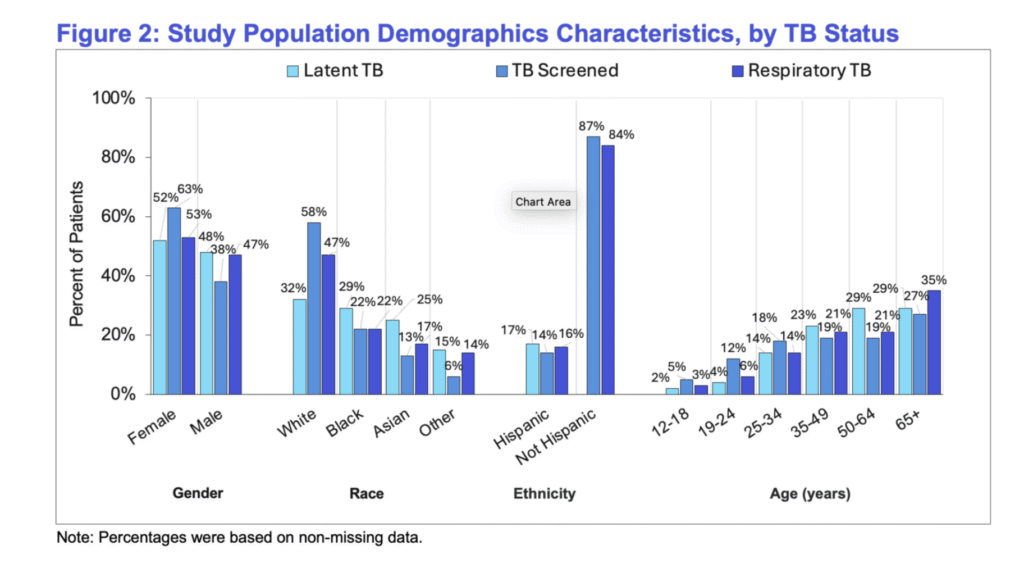
TB testing was significantly higher among females and younger people, whereas it was lower among nonwhite and Hispanic groups. There had been more latent TB recorded among Hispanic individuals. This is consistent with high-risk profiles often seen among overseas-born populations or the ones travelling to counties where it is common. 

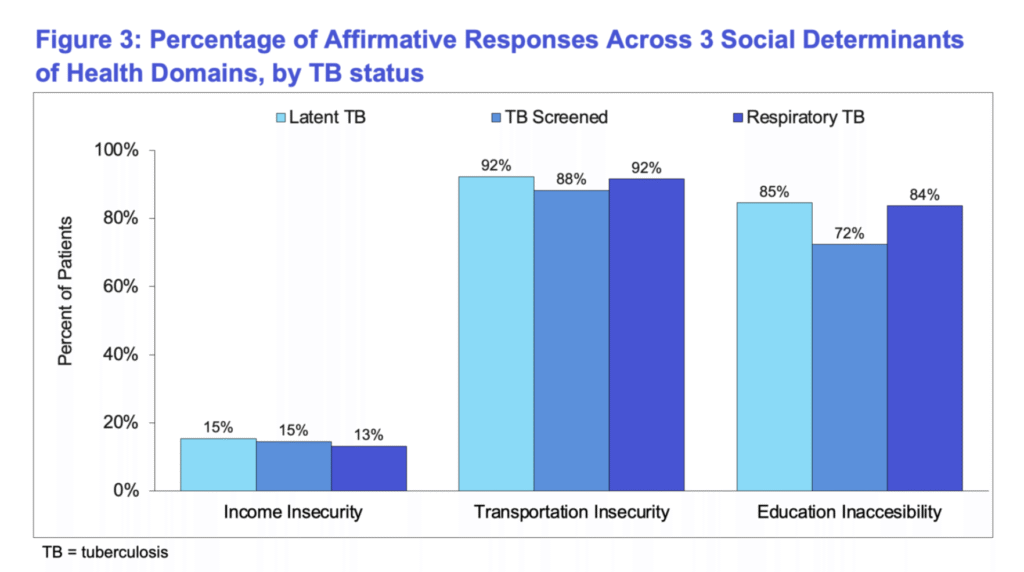
Approximately 5% of the population had data available on social health determinants, which revealed certain transportation and education barriers impeding prevention measures or treatment adherence. 

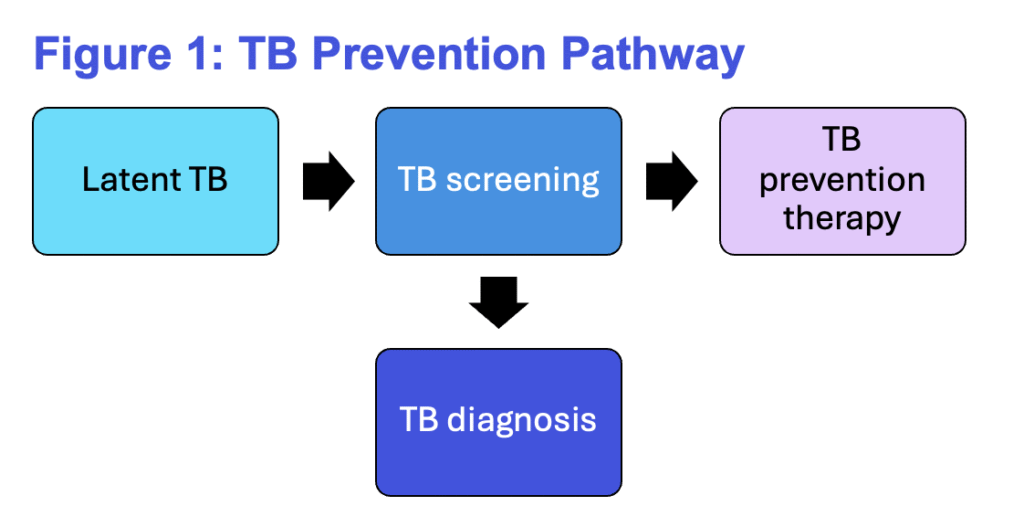
Figure 1. TB Prevention Pathway 

Figure 2. Study Population Demographics Characteristics, by TB Status 

Figure 3. Percentage of Affirmative Responses Across Social Determinants of Health Domains, by TB Status 

Why It Matters: Addressing Gaps in TB Prevention 

The study emphasizes early detection and screening to better prevent TB reactivation. The differences identified in screening rates indicate that demographic and social factors play a vital role to prevent TB. More targeted interventions can be developed to reduce inequities and improve outcomes if proper identification of populations (with limited access to screening and care) is done. 

Looking Ahead 

OMNY Health leverages real-world EHR data to better understand patient journeys enhancing preventive care. Future research is aimed to expand the SDoH integration into predictive modeling and public health decision-making. This will be helpful to bridge the gap between data and actionable outcomes. 

References 

  1. Centers for Disease Control and Prevention. National Data: Reported Tuberculosis in the United States, 2023. Reported Tuberculosis in the United States, 2023. 2024 Nov 7. Accessed February 10, 2025. https://www.cdc.gov/tb-surveillance-report-2023/summary/national.html 
  1. US Preventive Services Task Force. Screening for Latent Tuberculosis Infection in Adults: US Preventive Services Task Force Recommendation Statement. JAMA. 2023;329(17):1487–1494. doi:10.1001/jama.2023.4899C. 


© 2025 OMNY Health 

Categories
Product

Unlocking the Hidden Details: Why Unstructured Clinical Notes Are Crucial for Life Sciences 

In the world of life sciences, data is king. For decades, the focus has largely been on structured data, including neatly organized tables, registries with predefined fields, clinical trial results captured in clinical report forms (CRFs), and insurance claims data. While undeniably valuable, this structured data often tells only part of the story. 

The real goldmine, often overlooked and underutilized, lies within unstructured clinical text. These free-text narratives – physician notes, discharge summaries, pathology reports, and radiology findings, to name a few types – contain a wealth of detailed, nuanced, and patient-specific information that rows and columns simply cannot capture fully. 

For life sciences companies, understanding and extracting insights from this unstructured data is no longer a luxury, but a necessity.

Here’s why: 

The Limitations of Structured Data 

Imagine trying to understand a complex patient journey solely from a checklist. Structured data, by its very nature, simplifies and categorizes. It’s excellent for tracking demographics, diagnosis codes, medication lists, and lab results. However, it often misses: 

  • Nuance and Context: The why behind a diagnosis, the specific symptoms a patient described, or the subtle changes in their condition over time.  A coded diagnosis of “headache” doesn’t reveal if it’s a throbbing migraine, a dull ache, or accompanied by visual disturbances.  In fact, most initial visit notes contain a History of Present Illness (HPI) that document the seven cardinal features of the patient’s reason for the encounter: 
    • Onset: When did the symptoms start? (The beginning time/date). 
    • Location: Where on the body is the symptom? Does it radiate or travel anywhere else? 
    • Duration: How long does the symptom last when it occurs? (e.g., seconds, hours, constant). 
    • Character (or Quality): What does it feel like or look like? (e.g., sharp, dull, throbbing, crushing, burning). 
    • Aggravating/Alleviating Factors: What makes it better or worse? (e.g., movement, rest, food, medication). 
    • Radiation (or Related Symptoms): Does the symptom move to another part of the body (Radiation)? Or are there any other symptoms that occur with the primary one (Associated Symptoms)? 
    • Timing (or Temporal characteristics): When does it occur? (e.g., constantly, intermittently, only in the morning, with exertion). 
    • Severity (or Scale): How bad is the symptom? (Usually rated on a scale, such as 1-10 for pain). 
  • Patient History Beyond Codes: Family history details, lifestyle factors, or environmental exposures that might not fit into a predefined field. 
    • Family History: Particularly important for oncology and cardiovascular disease, involves identifying which nuclear/extended family members had related conditions. 
    • Lifestyle Factors: Smoking, alcohol usage, illicit drug use, living situation, social determinants of health, and sexual health are known to be important risk factors but often omitted from structured data. 
    • Occupational / Environmental Exposures: Extra information that sheds light on risk factors for diseases including cancer and asthma.   
  • Treatment Rationale and Adjustments: Why a particular treatment was chosen / switched to / switched from / discontinued, how a patient responded to it, and subsequent modifications. 
  • Rare Disease Insights: For conditions with limited structured data such as their own ICD-10 codes, the narrative of clinical notes becomes even more critical. 

Four Applications of Unstructured Data 

Now that we have established how notes can be delivered to researchers, how exactly can they be used to enhance clinical knowledge?   

After de-identification, the possibilities are endless.   Below we describe four common applications. 

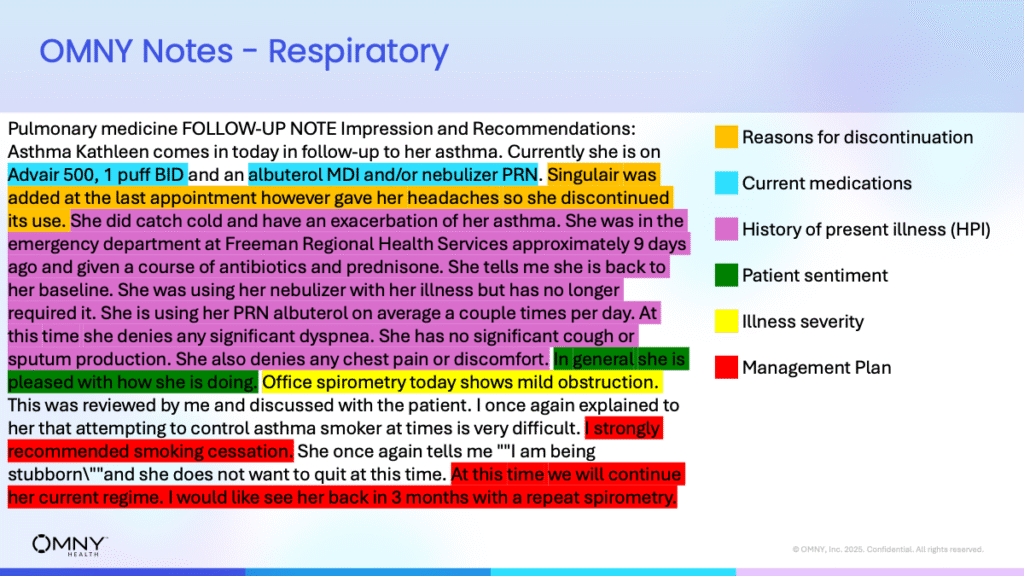
  • Extraction of Disease Severity: As opposed to the clinical trial world in which key outcomes are dutifully and regularly recorded, in the real-world researchers are reliant on physician record-keeping to identify the waxing and waning of disease progression.  And often, these outcomes, also known as severity measures, are found in free-text notes.  Learn more about how researchers at OMNY Health have been extracting information about disease severity from Notes since 2022 with the use of transformer-based pipelines and more recently with large language models (LLMs).   
  • Identifying Reasons for Treatment Discontinuation: Rollouts of newly developed drugs cost pharmaceutical companies millions of dollars; with that amount of investment, it becomes imperative to know more about why new drugs are being discontinued by patients/physicians, and which drugs are taking their place.  At OMNY Health, we have built various pipelines for extracting this information from clinical notes, again using both transformer-based methods and LLMs.   
  • Researching Rare Diseases: For rare diseases, clinical note repositories can be particularly useful in pooling large numbers of patients having such diseases and establishing basic clinical knowledge about them – e.g. What patients are at risk?  Why do some patients experience flares?  What treatments work best? An example is work that OMNY Health completed in partnership with a life sciences company on generalized pustular psoriasis (GPP).   Notes can also be used to find patients exhibiting symptoms or characteristics that might be consistent with undiagnosed rare diseases.  Clinical Notes can help identify patients that are candidates for genetic tests that could potentially validate a rare disease diagnosis. 
  • Training AI Models: In the age of Generative AI and LLMs, it is becoming more important than ever to find reputable sources of healthcare data (read: not the Internet) with which to train healthcare-specific LLMs that can reason without harmful biases.  Need a proven source of de-identified clinical notes from diverse populations and provider mixes with which to train your LLM?  We have made it possible.   

Learn More about OMNY Notes – Contact Us! 

At OMNY Health, we would love to discuss how our OMNY Notes product combined with our structured data offerings can support your clinical research initiatives and ultimately improve health outcomes.  Please contact us at info@omnyhealth.com.  We look forward to hearing from you! 

Categories
Product

Powering Research with LLMs and OMNY Health’s De-identified Clinical Notes in Cystic Fibrosis 

OMNY Health Notes when used in tandem with publicly accessible large language models can generate novel insights that previously were only accessible with labor intensive chart reviews.   

Large language models (LLMs) have advanced dramatically since they were first introduced to the mainstream public a few years ago.   When combined with large, nationally representative de-identified data sets like the OMNY Notes product they can deliver insights in just a few minutes that previously would have required months of effort, and also at a fraction of the cost.  Check out this brief demonstration on how today’s LLMs and OMNY Notes can be used together to enhance clinical research, using notes for patients treated with cystic fibrosis as a sample use case. 

Thank you for watching our demoPlease contact us using the email address/link provided in the video to discover how your research team can harness novel insights using OMNY Notes.